

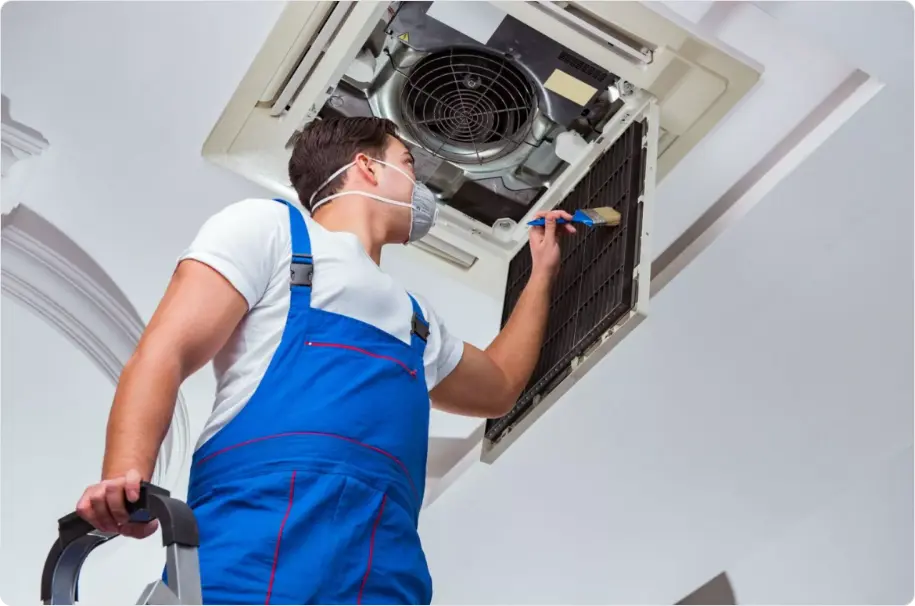
Your home’s air ducts circulate thousands of cubic feet of air every day—and in Dubai, that air carries desert dust, fine sand particles, mold spores from coastal humidity, and whatever else has accumulated inside your ductwork over months of continuous AC use. AC duct cleaning removes this buildup from your HVAC system’s supply and return ducts, grilles, registers, and diffusers, restoring airflow and improving the quality of air your family breathes.
Understanding what a professional AC duct cleaning service in Dubai actually does—step by step—helps you set realistic expectations, recognize quality work, and avoid the common trap of hiring a company that charges a low flat rate and delivers a surface-level job.
How Dubai Ducts Get Dirty (Faster Than You’d Think)
Your AC system pulls air through return vents, conditions it, then pushes it back through supply ducts into every room. During this continuous cycle—which in Dubai runs nearly 12 months a year—your ductwork accumulates contaminants from multiple sources simultaneously.
Desert dust and fine sand infiltrate even well-sealed buildings, coating duct interiors with an abrasive layer that thickens with every shamal storm. Coastal humidity in areas like Dubai Marina, JBR, and Business Bay creates the damp conditions inside ducts where mold and bacteria colonize quickly. Cooking releases grease particles that coat duct surfaces. Pet dander circulates constantly in homes with animals. And renovation or construction work—extremely common across Dubai’s ever-developing property stock—sends drywall dust, sawdust, and concrete particles deep into ductwork where they stay for years unless professionally extracted.
Debris settles in horizontal duct runs and around bends where airflow slows, building up in layers that gradually restrict airflow, force your system to work harder, and push your DEWA bill higher. This contamination cycle is why thorough cleaning requires specialized equipment—a household vacuum cannot generate the negative pressure needed to dislodge years of compacted buildup.
Before the Technicians Arrive: What to Prepare
A professional AC duct cleaning service in Dubai will bring all necessary equipment. Your job before they arrive is straightforward: clear access to all supply and return vents by moving furniture or stored items blocking grilles, and ensure the technicians can reach your main AC unit and air handler. In Dubai apartments and villas, access panels are often located in ceilings or utility cupboards—knowing where yours is will speed up the process.
If you have pets, secure them in a separate room. The equipment used creates noise and some vibration, and loose pets can interfere with the work.
Expect the full process to take 3 to 5 hours for an average Dubai apartment or villa. Larger properties, or those with heavily contaminated systems, will take longer. A company quoting less than 2 hours for a complete duct clean in a standard villa is almost certainly cutting corners.
Step 1: Inspection and System Assessment
A reputable Dubai duct cleaning company begins with an inspection before any equipment is deployed. Technicians walk through the property, locating all supply and return vents, and assess the condition of accessible ductwork—often using a camera or torch to look inside duct openings.
This inspection serves two purposes. First, it establishes the scope of work and identifies any problem areas requiring special attention: heavy mold growth, pest debris, post-renovation contamination, or damaged duct sections. Second, it creates a documented baseline—quality companies provide before photos so you can compare results after the clean.
At this stage, your HVAC system is turned off completely at both the thermostat and the main breaker. Working on a live system spreads contaminants further into your home and creates safety risks. The system should remain off throughout the cleaning process.
If the inspection reveals mold growth, pest infestation, or damaged ductwork, a professional technician will flag this before starting. Mold requires antimicrobial treatment in addition to mechanical cleaning. Pest debris requires specialized handling. Damaged or leaking ducts may need repair work that a cleaning service alone cannot address.
Step 2: Vent Cover Removal and Cleaning
With the inspection complete, technicians remove all vent covers—supply grilles and return air grilles—throughout the property. This step is more impactful than it sounds: vent covers accumulate significant dust, pet hair, and debris that restricts airflow directly at the point where air enters your rooms.
Covers are cleaned thoroughly—typically washed with warm soapy water and scrubbed between slats—then dried completely before reinstallation. Moisture on reinstalled grilles introduces mold risk into your duct system, so drying matters.
With covers removed, technicians vacuum the exposed duct openings to capture loose surface debris before the deeper cleaning phases begin. This prevents surface contaminants from being pushed further into the system during agitation.
Removing vent covers also reveals diagnostic information. Dark staining around register openings often indicates air leakage or excessive upstream accumulation. Musty odors from specific vents point to localized moisture issues. These observations inform how the rest of the cleaning is approached.
Step 3: Establishing Negative Air Pressure
This is the step that separates professional AC duct cleaning in Dubai from ineffective DIY attempts or low-quality services.
Professional technicians connect a powerful negative air machine—an industrial vacuum unit generating between 3,000 and 16,000 CFM of suction—directly to your main trunk line or a central return air vent. This creates negative pressure throughout the entire duct system: a controlled environment where air (and any dislodged debris) is continuously pulled toward the collection unit rather than dispersed into your living spaces.
The negative pressure system runs throughout the remainder of the cleaning process. It is the containment mechanism that makes everything else safe and effective—without it, agitation in Step 4 would simply blow debris around your home.
In Dubai, reputable companies use HEPA-filtered collection systems to ensure extracted particles do not re-enter the air during the process. Ask specifically about HEPA filtration when comparing service providers.
Step 4: Mechanical Agitation and Debris Extraction
With negative pressure established, technicians work systematically through every branch of your duct system using mechanical agitation tools to break up and dislodge accumulated debris.
Rotary brush systems are the primary tool: motorized brushes with spinning bristles that travel the length of duct runs, physically scrubbing walls and dislodging compacted dust, biological buildup, and sand deposits. These brushes are sized to the duct dimensions and extended through vent openings or access points to reach the full length of each branch.
Compressed air tools are used alongside brushes for resistant deposits, particularly near bends and junctions where debris compacts. Short, focused bursts dislodge material that brushes alone cannot reach. The negative pressure system captures this dislodged debris immediately, pulling it toward the collection unit.
Technicians work methodically from supply registers through return pathways, verifying each section reaches acceptable cleanliness standards before moving on. Quality providers will show you camera footage or photos of duct interiors after each section is cleaned.
In Dubai, where fine desert sand creates an abrasive, compacted layer inside ducts that differs from typical household dust, this mechanical agitation phase is especially important. Sand does not respond to suction alone—it requires physical dislodging before it can be extracted.
Step 5: Cleaning the HVAC Components
The ductwork is one part of the system. A thorough AC duct cleaning service in Dubai also addresses the core HVAC components where contamination directly impacts performance:
Blower motor and fan assembly. Dust buildup on fan blades creates imbalance that strains the motor and reduces airflow efficiency. Technicians clean fan blades with specialized brushes and controlled vacuuming, restoring proper rotation without damaging the motor.
Evaporator coil. The coil’s tightly-spaced fins trap moisture and debris, creating an ideal environment for mold and bacterial growth. Cleaning the coil—and ensuring it is fully dry before the system restarts—removes this contamination source and restores heat transfer efficiency. A dirty coil forces your compressor to work harder, directly increasing electricity consumption.
Drip pan and drain line. In Dubai’s humid coastal areas, drain pan blockages are a common cause of water damage and mold growth. Technicians clear and inspect the drain line to ensure condensate flows freely.
Air handler and plenum. The air handler is the central point through which all conditioned air passes. Cleaning here ensures that freshly cleaned ducts aren’t immediately recontaminated by a dirty central unit.
Step 6: Sanitization with Approved Products
After mechanical cleaning, reputable companies in Dubai apply antimicrobial sanitization to duct interiors and system components. This step eliminates mold spores, bacteria, and other biological contaminants that mechanical cleaning dislodges but does not kill.
Critically, in Dubai, any sanitization chemicals used inside your HVAC system should be Dubai Municipality-approved and EPA-registered. Ask your service provider to confirm this specifically. Products that are not approved for enclosed HVAC use can leave chemical residues that then circulate through your home.
Sanitization works only when applied to already-clean surfaces—it is the final layer of protection, not a substitute for thorough mechanical cleaning. A company that skips the agitation steps and jumps straight to spraying chemicals has not cleaned your ducts; they have treated a dirty surface.
Step 7: Reinstallation and Final Verification
With cleaning and sanitization complete, technicians reinstall all vent covers and restore the system to operation. A quality service includes a final airflow check—verifying that air is moving properly from each supply vent and returning correctly through each return grille.
Ask for after-photos or camera footage of duct interiors at this stage. Comparing these against the before-inspection images gives you objective evidence that the work was performed thoroughly. If a company is unwilling to provide this documentation, that is a warning sign.
After the system restarts, replace your AC filters immediately—even if they were recently changed. The cleaning process can dislodge fine particles that settle near the air handler, and fresh filters ensure these are captured before they re-enter the duct system.
What Duct Cleaning Cannot Fix
Setting realistic expectations helps you make the right decision about when and whether to book a service.
Professional duct cleaning removes accumulated contamination from inside your duct system. It does not repair damaged or leaking ductwork, seal gaps where outside air infiltrates the system, or fix inadequate ventilation design. If your ducts have tears or poor connections—common in older Dubai buildings—cleaning the interior of a leaking duct will not prevent rapid recontamination. Duct sealing or repair work needs to happen alongside or before the clean.
Cleaning also does not eliminate the root causes of mold. If moisture is entering your system through a leaking drain pan or poorly insulated ductwork, mold will return after cleaning unless the moisture source is fixed. A professional technician should identify this during the initial inspection and flag it before starting work.
Finally, duct cleaning is one part of indoor air quality management, not a complete solution. Allergens embedded in carpets, upholstery, and curtains require separate intervention. Ventilation deficiencies require HVAC design changes. Treat duct cleaning as an important and impactful layer of maintenance—not a standalone fix for every air quality concern.
Red Flags: How to Spot a Low-Quality Service
Dubai’s duct cleaning market includes many operators, and quality varies considerably. Watch for these warning signs:
Suspiciously low flat-rate pricing. Legitimate duct cleaning in a standard Dubai apartment typically costs AED 500 to AED 1,200. A quote significantly below this range usually means the company will either rush through the job, skip components, or use the low price as a starting point for upselling unnecessary add-ons.
No mention of negative pressure equipment. If a company does not specifically reference negative air machines or vacuum containment, they are likely using methods that spread debris rather than contain it.
No before-and-after documentation. Confidence in the quality of work is demonstrated by showing customers what was inside their ducts before and after. Refusal to provide this documentation is a red flag.
Cleaning only supply vents. A proper duct clean addresses both supply and return sides of the system, plus HVAC components. Any service that only accesses supply registers is incomplete.
No mention of Dubai Municipality-approved sanitization products. In Dubai’s regulated environment, this is a meaningful quality indicator.
Key Takeaways
Professional AC duct cleaning in Dubai is a systematic, multi-step process that takes 3 to 5 hours and requires specialized equipment: negative air pressure machines, rotary brush systems, HEPA filtration, and Dubai Municipality-approved antimicrobial products. It addresses not just the duct interior, but the blower motor, evaporator coil, drip pan, and air handler.
When evaluating companies, prioritize NADCA-certified providers who offer transparent scope-based pricing, camera documentation, and approved sanitization chemicals. The cleaning frequency appropriate for most Dubai properties is every 12 months, with more frequent service for properties near construction, in humid coastal areas, with pets, or after renovation work.
Done properly by a qualified provider, AC duct cleaning in Dubai delivers measurable improvements in air quality, system efficiency, and equipment lifespan—a worthwhile investment in a city where your air conditioning never gets a day off.